Glory Toss Pioneer
Glory Toss Pioneer stands as India's most ambitious digital celebration of traditional street games, bringing to life the forgotten art of tossing and throwing games that have been part of Indian childhood for generations. Released in November 2024 by Daman Games Studios, this innovative title bridges the gap between India's rich cultural heritage and modern gaming technology, preserving fast-disappearing traditional games for the smartphone generation.
Unlike typical sports games that focus on international sports like cricket or football, Glory Toss Pioneer shines a spotlight on India's indigenous games—from gilli-danda and lagori to pithoo and kancha—that were once played in every galli (lane) and mohalla (neighborhood) across the country. The game's name pays homage to the glory of these traditional pastimes while positioning itself as a pioneer in their digital preservation and popularization.
What truly sets Glory Toss Pioneer apart is its authentic recreation of these games with all their nuanced rules and regional variations. Players don't just play generic tossing games—they experience the specific versions played in Punjab's villages, Tamil Nadu's towns, Maharashtra's chawls, and Assam's naamghars, complete with local terminology and traditional scoring systems.
The game has struck a nostalgic chord with older Indian players who grew up with these games, while introducing a new generation to their cultural significance. For many urban millennials and Gen Z players, Glory Toss Pioneer has become a surprising connection to their roots, teaching them about games their parents and grandparents played before the arrival of video games and smartphones.
Game Overview 🎯
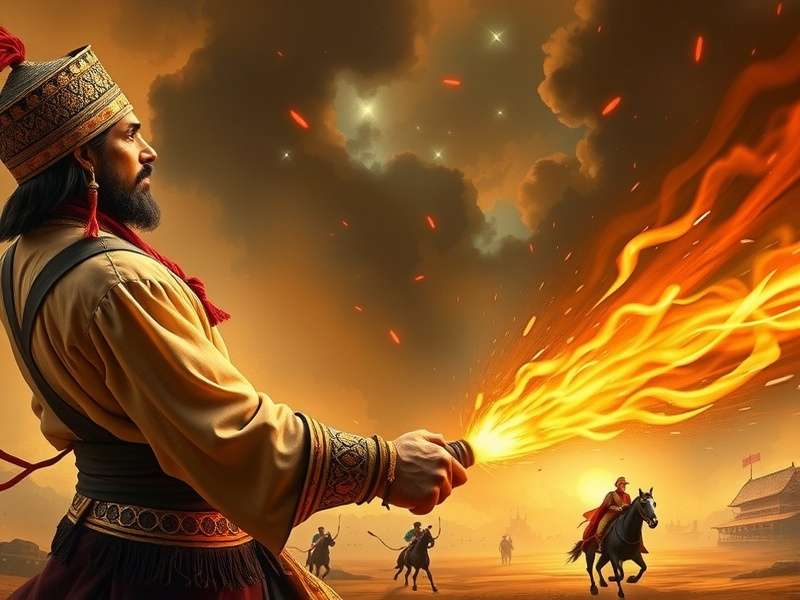
Glory Toss Pioneer brings together 24 traditional Indian throwing and tossing games from across the length and breadth of the country, each recreated with meticulous attention to authentic rules, equipment, and playing conditions. From the northern plains to southern coasts, from eastern hills to western plateaus, the game captures the incredible diversity of India's indigenous street games.
The game begins with players choosing their "galli" (neighborhood) representing different regions of India—Delhi's Chandni Chowk, Mumbai's Dharavi, Chennai's Mylapore, Kolkata's Howrah, Bangalore's Basavanagudi, Hyderabad's Charminar, or Amritsar's Golden Temple vicinity. Each location offers different game variations, commentary in local dialects, and authentic background sounds that transport players to that specific part of India.
The core experience revolves around mastering the traditional techniques that made these games so beloved for generations. Unlike modern sports games that emphasize power and speed, Glory Toss Pioneer rewards the subtle skills of angle, spin, touch, and strategy that defined these street games. Players must learn the "thoda hai thodi nahi" (just right) precision that separates champions from ordinary players in these traditional games.
What makes Glory Toss Pioneer truly revolutionary is its "Heritage Mode," which documents the history and cultural significance of each game through videos of elderly players demonstrating authentic techniques, interviews with traditional game experts, and archival footage of these games being played in different eras. This educational component has made the game popular not just among gamers but also among cultural preservationists and educators.
The game features stunning recreations of Indian neighborhoods where these games are traditionally played—from the narrow lanes of Varanasi with their cow-dung polished playing circles to the open maidan (grounds) of Mumbai where tournaments were held during festivals. The attention to detail extends to the equipment, with gilli-danda pieces crafted from the correct types of wood, kancha marbles with authentic glass patterns, and lagori stones stacked in traditional formations.
One of the game's most innovative features is its "Guru System," where virtual mentors based on real-life traditional game experts guide players through the nuances of each game. These mentors represent different age groups and regions, from a 70-year-old Ustadji from Lucknow who teaches the finer points of gilli-danda to a teenage champion from Jaipur who demonstrates modern variations of pitthoo that have evolved with urban constraints.
Gameplay Mechanics 🎮
Core Gameplay Systems
Glory Toss Pioneer features a sophisticated physics engine specifically designed to replicate the unique trajectories and interactions of traditional Indian game equipment. Unlike generic sports game physics, this engine accounts for the properties of Indian materials—the bounce of a mango wood gilli, the roll of kancha marbles on different surfaces, the stacking stability of river stones used in lagori, and the aerodynamics of handmade paper planes in the "patangbazi" mode.
The control system has been carefully developed to balance authenticity with playability. Players can choose between touch controls that mimic real throwing motions or button-based controls for precise gameplay. The game uses motion controls on mobile devices to allow players to actually perform the throwing actions, with haptic feedback recreating the feel of wooden sticks, stone balls, and other traditional game equipment.
Each game in Glory Toss Pioneer features its authentic scoring system, many of which vary dramatically from region to region. For example, gilli-danda has different point systems in Uttar Pradesh versus Maharashtra, while pitthoo has unique rules in Punjab compared to Tamil Nadu. The game celebrates this diversity by allowing players to select regional rule variations or compete in tournaments that follow standardized national rules developed by traditional game associations.
Game-Specific Mechanics
Glory Toss Pioneer meticulously recreates the unique mechanics of each traditional game:
- Gilli-Danda – The classic game where a small stick (gilli) is balanced on a stone, struck with a longer stick (danda) to launch it into the air, then hit again to send it flying as far as possible. The game accurately simulates the "chouka" (perfect hit) that sends the gilli flying the maximum distance, a skill that separates masters from novices.
- Lagori/Pitthoo – Stacking seven stones and throwing a ball to knock them down, then rebuilding the stack while opponents try to hit you with the ball. The game captures the strategic positioning and quick reflexes needed to win this high-energy game.
- Kancha/Goti – Marbles games that involve shooting glass balls to hit opponents' marbles or land in specific holes. The game features different varieties like "tiki" (target shooting), "hole kancha" (marble golf), and "team kancha" (capture the flag with marbles).
- Langdi/Taang – A hopping and throwing game where players balance on one leg while trying to hit opponents with a soft ball. The game accurately simulates the stamina and balance challenges of this deceptively simple game.
- Chor Police – A strategic throwing and hiding game that combines tag with object throwing, popular in rural areas where open spaces allow for elaborate game zones.
Each game in Glory Toss Pioneer includes both the "traditional" version played for generations and "modern" adaptations that have evolved with changing urban spaces and materials. This dual approach allows players to experience authentic traditional gameplay while also seeing how these games continue to evolve in contemporary India.
Multiplayer and Social Features
Glory Toss Pioneer celebrates the inherently social nature of traditional Indian games with comprehensive multiplayer features. Players can compete in local multiplayer with friends on the same device using the "galli mode" that simulates sitting in a circle on a charpoy (string bed) or mat, or connect online with players across India and internationally.
The game's "Mahotsav" (festival) mode recreates the tournament atmosphere of traditional game competitions held during festivals like Holi, Diwali, and Makar Sankranti. These events feature commentary in regional languages, crowds cheering with authentic slogans, and prize ceremonies that follow local traditions—from winning a ladoo (sweet) to receiving a gamcha (cotton towel) as a trophy.
The "Family Legacy" mode allows players to create multi-generational teams, passing down skills from virtual grandparents to grandchildren in a gameplay mechanic that mirrors how these games were traditionally taught within families and communities. This feature has proven particularly popular among the Indian diaspora, who use it to connect their children with cultural practices from their homeland.
Progression and Mastery
Unlike many modern games that rely on unlockable equipment or power-ups, Glory Toss Pioneer focuses on skill progression that mirrors real mastery of traditional games. Players advance by improving their technique, learning new shots and strategies, and mastering different playing conditions—from playing gilli-danda on a dusty village path versus a concrete city courtyard.
The game's progression system is based on traditional Indian guru-shishya (teacher-disciple) relationships. Players begin as "shishya" (students) and advance through ranks like "ustad" (expert), "mahaguru" (great teacher), and ultimately "kalamaharshi" (master artist), each rank requiring demonstration of not just technical skill but also understanding of the cultural context and etiquette of these games.
| Traditional Game | Regional Names | Key Skills Developed | Cultural Significance |
|---|---|---|---|
| Gilli-Danda | Dandi-Biyo (Nepal), Tipcat (English) | Hand-eye coordination, timing, precision | One of India's oldest recorded games, mentioned in ancient texts |
| Lagori/Pitthoo | Seven Stones, Satodiyu, Lingocha | Accuracy, speed, teamwork, strategy | Played during harvest festivals to celebrate community cooperation |
| Kancha/Goti | Marbles, Golli, Kanche | Precision, strategy, concentration | Traditionally played during Sankranti with special glass marbles |
| Langdi/Taang | Hopscotch, Ekka-Dokka, Stapu | Balance, stamina, strategy | Developed as military training exercise in ancient kingdoms |
| Atapatli | Hopscotch, Tokkudu Billa, Kith-Kith | Balance, counting, pattern recognition | Used for teaching numbers and patterns to children |
Traditional Roots and Cultural Significance 🌱
Historical Origins 🕰️
The games featured in Glory Toss Pioneer have roots stretching back thousands of years in Indian history. Archaeological evidence suggests that games involving throwing sticks and balls were played in the Indus Valley Civilization (2600-1900 BCE), with terracotta figurines depicting children playing with round objects that resemble kancha marbles.
References to games similar to gilli-danda appear in ancient Sanskrit texts like the Mahabharata, where the Pandava prince Bhima is described playing a game with wooden pieces during his exile. The 13th-century text "Manasollasa" by King Someshvara III contains detailed descriptions of ball games and throwing contests that formed part of royal entertainment and physical education.
These games were not merely recreational but served important social and developmental purposes. In rural communities, they were integrated into agricultural cycles, with different games played during planting, harvesting, and festival seasons. The physical skills developed through these games directly supported agricultural work—throwing accuracy for sowing seeds, hand-eye coordination for winnowing grain, and stamina for long workdays in the fields.
Colonial records from the British period document how these traditional games persisted despite the introduction of Western sports like cricket and football. British administrators often noted with fascination the incredible skill Indian villagers displayed in games like gilli-danda, with some colonial officers even organizing competitions between Indian players and British soldiers, much to the surprise of the latter when they were outperformed by players using "primitive" equipment.
Regional Variations and Diversity 🗺️
One of the most striking aspects of the games in Glory Toss Pioneer is their incredible regional diversity across India. What is called gilli-danda in North India is known as "tipcat" in English-speaking areas, "chinni-dandu" in Karnataka, "kitti-pullu" in Tamil Nadu, "bam-bam" in Bengal, and "dhinga-guli" in Assam—each with slightly different rules, equipment dimensions, and playing styles.
Glory Toss Pioneer celebrates this diversity by including these regional variations as playable options. For example, the Punjabi version of pitthoo uses softer balls made from cloth wrapped around rags, reflecting the colder climate where bare hands need protection, while the Tamil Nadu version uses hard rubber balls that bounce better on the region's hard-packed earth surfaces.
The game also documents how these variations evolved based on local materials. In forested areas of Kerala and Karnataka, gilli-danda pieces are traditionally made from teak or rosewood, while in desert regions of Rajasthan, they're crafted from hardy kikar wood. Kancha marbles in coastal areas often incorporate sea glass, while those in inland regions use colored glass imported through ancient trade routes.
Festival-specific variations are another fascinating aspect preserved in Glory Toss Pioneer. During Holi, the festival of colors, special versions of these games are played with colored equipment and modified rules that incorporate the celebratory nature of the festival. Similarly, during Diwali, tournament versions with prize money and community recognition are featured, reflecting how these games become focal points of festival celebrations in many communities.
Social and Educational Value 🎓
Beyond entertainment, the traditional games in Glory Toss Pioneer served important educational and socialization functions in Indian society. They were, and in many places still are, informal learning tools that taught children essential life skills:
- Mathematical Concepts – Counting scores, calculating distances, understanding angles and trajectories
- Physics Principles – Practical understanding of gravity, momentum, and balance
- Social Skills – Teamwork, turn-taking, rule-following, and conflict resolution
- Ethical Values – Sportsmanship, honesty, respect for opponents, and gracious winning/losing
- Environmental Awareness – Knowledge of local materials, weather patterns, and playing conditions
Many of these games also incorporated moral lessons and storytelling. Elders would use game metaphors to teach life lessons—how a well-placed gilli-danda hit requires patience and timing just like important life decisions, or how rebuilding the lagori stack teaches persistence and teamwork after setbacks.
Glory Toss Pioneer incorporates this educational dimension through its "Gyan Mode" (Knowledge Mode), which explains the underlying principles and life lessons embedded in each game. This feature has made the game popular in Indian schools as a teaching tool that connects modern students with traditional wisdom.
Decline and Revival Efforts 🔄
Despite their cultural significance, many traditional Indian games have declined dramatically in popularity over the past few decades due to urbanization, changing lifestyles, and the influx of digital entertainment. Narrower streets, fewer open spaces, safety concerns, and children spending more time with screens have all contributed to this decline.
Glory Toss Pioneer emerged from a collaboration between Daman Games and several cultural preservation organizations working to document and revitalize these traditional games. The development team spent over two years traveling across India, recording gameplay from elderly practitioners, documenting rules and variations, and collecting oral histories about the role of these games in different communities.
The game has become part of a broader traditional games revival movement in India, which includes school programs, community tournaments, and government initiatives to include these games in physical education curricula. Several states, including Karnataka and Madhya Pradesh, have officially recognized these games as part of their cultural heritage and introduced them in school competitions alongside modern sports.
For the Indian diaspora, Glory Toss Pioneer has become a valuable tool for passing cultural knowledge to second and third-generation children who may have never seen these games played in real life. Many Indian parents abroad report using the game to teach their children about Indian culture in a fun, engaging way that sparks curiosity about their heritage.
Game Modes and Features 🎪
Career Mode 🏆
Glory Toss Pioneer's Career Mode takes players on a journey from a small-town "galli champion" to national tournament winner, experiencing the different levels of competition in traditional Indian games. Players start in their neighborhood lane, competing against friends and local rivals, then progress to mohalla (community) tournaments, city championships, state-level competitions, and ultimately the National Traditional Games Championship held in Delhi's iconic Rajpath during Republic Day celebrations.
Each career stage features authentic opponents with different playing styles reflecting regional approaches to the games. A player from Varanasi might employ a highly technical, traditional style of gilli-danda passed down through generations, while a Mumbai player might use an innovative, street-smart approach developed from playing in constrained urban spaces.
The career progression includes not just improving skills but also learning the cultural etiquette and traditions associated with competitive play. Players must demonstrate respect for opponents, follow traditional pre-game rituals, and even learn the appropriate language and terminology for different regions to progress to higher levels.
Heritage Preservation Mode 📚
One of the most unique aspects of Glory Toss Pioneer is its Heritage Preservation Mode, which functions as an interactive documentary about India's traditional games. This mode includes:
- Oral Histories – Video interviews with elderly players sharing memories and techniques
- Photographic Archives – Historical images of traditional games from the early 20th century
- Regional Variation Database – Detailed documentation of how rules and equipment vary across India
- Making-of Videos – How traditional game equipment is crafted using authentic methods
- Expert Commentary – Cultural historians explaining the significance and evolution of each game
This educational content is seamlessly integrated with gameplay, allowing players to switch between learning about the games and actually playing them. The Heritage Preservation Mode has been praised by cultural organizations and educational institutions for making traditional knowledge accessible to digital-native generations.
Multiplayer and Online Modes 🌐
Glory Toss Pioneer offers several multiplayer options that reflect the social nature of traditional Indian games:
- Local Multiplayer – Up to 8 players on a single device, mimicking sitting in a circle on the ground
- Online Multiplayer – Compete against players worldwide with regional and global leaderboards
- Team Play – Form "galli teams" with friends for team-based traditional games
- Cooperative Mode – Work together to achieve high scores or complete challenges
- Tournament Mode – Organize or participate in structured competitions with elimination rounds
The game's online community features "virtual tournaments" that follow the calendar of Indian festivals, with special events during Holi, Diwali, Eid, Christmas, and other festivals. These events often feature special game variations traditionally played during these festivals and offer rewards that celebrate the specific cultural context of each occasion.
Customization and Creation Tools 🛠️
Glory Toss Pioneer empowers players to customize their gaming experience while respecting traditional forms:
- Character Customization – Choose from characters representing different age groups, regions, and backgrounds
- Equipment Customization – Select from authentic materials and designs for game pieces
- Playing Field Customization – Choose from different locations across India with authentic surfaces
- Rule Editor – Create custom variations of games, sharing them with the community
- Create-a-Game – Design new games inspired by traditional principles
The game's "Innovator Mode" encourages players to develop new variations of traditional games that adapt to modern living spaces and materials, fostering creativity while maintaining cultural connections. Some of the most popular user-created game variations have even been officially incorporated into updates based on community feedback.
Accessibility Features ♿
Glory Toss Pioneer includes comprehensive accessibility features to ensure that traditional games can be enjoyed by players of all abilities:
- Visual Accessibility – High contrast modes, customizable text sizes, and colorblind options
- Audio Accessibility – Subtitles for all dialogue, audio cues for visual events, and customizable sound levels
- Motor Accessibility – Multiple control schemes, adjustable difficulty, and support for adaptive controllers
- Cognitive Accessibility – Tutorials at different skill levels, simplified rules options, and progress tracking
- Language Accessibility – Localization in 16 Indian languages plus English
These features have made the game accessible to players with disabilities while also helping younger and older players adapt to the gameplay at their own pace. The developers worked with accessibility organizations in India to ensure that these features meet international standards while respecting Indian cultural contexts.
Development and Cultural Research 🛠️
Field Research and Documentation 📝
The development of Glory Toss Pioneer began with an extensive research phase that spanned two years and covered over 20 states across India. The development team, consisting of game designers, cultural researchers, and traditional game experts, traveled to rural villages, urban neighborhoods, and remote communities to document the authentic forms of these games before they disappear.
Lead designer Priya Sharma explained, "We realized that many traditional games were being lost as older generations passed away and children turned to digital entertainment. Glory Toss Pioneer was conceived not just as a game but as a digital archive that could preserve these cultural treasures for future generations while making them engaging and relevant today."
The research team recorded over 1,200 hours of gameplay footage, conducted more than 300 interviews with traditional game experts and elderly players, and collected hundreds of physical game artifacts that were 3D-scanned to create accurate digital versions. This meticulous documentation ensured that the game reflects authentic techniques, equipment specifications, and rule variations from different regions.
The team worked closely with organizations like the Indira Gandhi National Centre for the Arts (IGNCA) and the Ministry of Culture's National Mission for Manuscripts to verify historical information and ensure cultural accuracy. This collaboration helped uncover forgotten game variations and historical context that might have otherwise been lost to time.
Technical Implementation 💻
Glory Toss Pioneer utilizes a custom-built physics engine specifically designed to replicate the behavior of traditional game equipment. Unlike generic physics engines used in most sports games, this engine accounts for the unique properties of Indian materials:
- The density and flexibility of different Indian woods used for gilli-danda pieces
- The weight distribution and bounce characteristics of handmade clay and glass marbles
- The stacking stability of river stones of varying sizes and shapes
- The aerodynamic properties of traditional kites and paper planes
- The interaction of game pieces with different Indian surfaces (mud, concrete, grass, etc.)
The game's graphics engine employs photogrammetry techniques to recreate authentic Indian environments where these games are played—from the cow-dung polished courtyards of rural homes to the concrete plazas of urban chawls, from the dusty lanes of village markets to the open maidans of city parks.
Technical challenges included creating realistic character animations that reflect the natural movements of people playing these games informally, rather than the stylized movements seen in most sports games. The development team used motion capture with both traditional game experts and ordinary players to capture the authentic body language and techniques of real gameplay.
Cultural Sensitivity and Representation 🎭
A core principle guiding the development of Glory Toss Pioneer was ensuring authentic and respectful representation of India's diverse cultural traditions. The development team established a Cultural Advisory Board consisting of 15 traditional game experts, cultural historians, and community leaders from different regions of India.
This board reviewed all aspects of the game to ensure cultural accuracy and sensitivity:
- Verification of regional game variations and terminology
- Appropriate representation of cultural contexts and rituals
- Sensitive portrayal of different communities and traditions
- Accurate depiction of historical and contemporary contexts
- Respectful use of traditional knowledge and practices
Special care was taken to represent India's linguistic diversity, with the game featuring voice acting in 16 Indian languages plus English, each performed by native speakers using authentic regional accents and terminology. This linguistic authenticity has been particularly appreciated by players from different parts of India who hear their local dialects and game names accurately represented.
Community Collaboration and Co-creation 🤝
Glory Toss Pioneer was developed in close collaboration with traditional game communities across India. The development team organized "game jams" in different regions where local players, elders, and youth contributed ideas for the game and tested early prototypes. This participatory approach ensured that the game reflected the living traditions of these games rather than just historical documentation.
Revenue-sharing agreements were established with traditional game communities and cultural preservation organizations, ensuring that the economic benefits of the game support the very traditions it celebrates. A portion of each game sale goes to organizations working to preserve traditional games and support elderly practitioners who demonstrated techniques for the game.
The game has also created new economic opportunities for traditional craftspeople who make game equipment. Many of these artisans, who were struggling to find buyers for their handmade gilli-danda sets, kancha marbles, and lagori stones, have seen renewed demand for their work as players of Glory Toss Pioneer seek authentic physical versions of the games they've played digitally.
Reception and Impact 🏆
Player Reception 🎉
Since its release in November 2024, Glory Toss Pioneer has received overwhelmingly positive response from players across India and among the Indian diaspora. The game has struck a particularly strong chord with players aged 30-50 who grew up playing these traditional games, evoking powerful nostalgia while introducing their children to cultural practices they might otherwise never experience.
Younger players have responded enthusiastically to the accessible gameplay and educational content, with many reporting newfound appreciation for Indian cultural heritage they previously knew little about. Schools and educational institutions have embraced the game as a teaching tool that makes cultural studies engaging and interactive.
Critics have praised the game for its innovative approach to cultural preservation and its high production values that match international gaming standards while celebrating Indian traditions. The Indian Express called it "a groundbreaking achievement that proves cultural preservation can be both authentic and entertaining," while The Hindu noted that "Glory Toss Pioneer has done more to preserve traditional Indian games in one year than decades of academic efforts."
Awards and Recognition 🏅
Glory Toss Pioneer has received numerous awards and recognition for its cultural preservation and innovation:
- National Heritage Award – Ministry of Culture, Government of India
- Best Cultural Game – Indian Gaming Awards
- Excellence in Traditional Knowledge Preservation – UNESCO Digital Heritage Awards
- Innovation in Game Design – South Asian Game Developers Conference
- Best Educational Game – International Mobile Gaming Awards
- Cultural Impact Award – India International Centre
The game's developers have been invited to present at international conferences on cultural preservation, digital heritage, and game design, sharing their approach to creating commercially successful games that serve important cultural purposes.
Cultural Impact 🌍
Beyond entertainment, Glory Toss Pioneer has had significant cultural impact across India:
- Revival of traditional game tournaments in schools and communities
- Increased demand for traditional game equipment among both children and adults
- Integration of traditional games into physical education curricula in several states
- Documentation of endangered game variations before they disappear entirely
- Creation of new platforms for traditional game experts to share their knowledge
The game has also sparked a broader conversation about preserving India's intangible cultural heritage in the digital age. Cultural organizations have cited Glory Toss Pioneer as a model for how digital media can be used not just to document but also to revitalize traditional practices for new generations.
Educational Impact 🎓
Glory Toss Pioneer has been adopted by educational institutions across India as a teaching tool for:
- Cultural studies and heritage education
- Physical education and traditional sports
- Mathematics and physics through game mechanics
- Social studies and community living
- Linguistics and regional language learning
The game's educational potential has been recognized by the Central Board of Secondary Education (CBSE), which has included references to traditional games and Glory Toss Pioneer in its cultural education guidelines for schools. Several state education boards have followed suit, integrating the game into their curriculum frameworks.
Future Developments and Legacy 🚀
Upcoming Expansions 🌱
The developers of Glory Toss Pioneer have announced plans to expand the game with additional content that further celebrates India's traditional games:
- North Eastern Games Pack – Featuring traditional games from Assam, Manipur, Meghalaya, and Nagaland
- Indigenous Games Collection – Games from tribal communities across central and eastern India
- Water Games Expansion – Traditional games played during monsoon season and near water bodies
- Festival Games Edition – Special game variations played during India's major festivals
- Ancient Royal Games – Historical games played by Indian royalty and nobility
Each expansion will include not just playable games but also extensive cultural documentation, ensuring that even lesser-known traditional games receive the same level of preservation and celebration as the more popular ones.
Educational Programs 📚
Building on the game's educational success, Daman Games has partnered with educational institutions to develop formal educational programs based on Glory Toss Pioneer:
- Teacher training workshops on using traditional games for education
- After-school programs combining digital and physical play of traditional games
- Teacher's guides and lesson plans incorporating the game into various subjects
- Community outreach programs in rural areas combining game play with education
- Scholarships for young players who demonstrate exceptional skill in traditional games
These initiatives aim to create a holistic approach to traditional game preservation that combines digital accessibility with physical play, ensuring that these games continue to be part of living culture rather than just museum pieces.
Cultural Preservation Initiatives 🏛️
The Glory Toss Pioneer team has established the Traditional Games Preservation Foundation, dedicated to documenting and revitalizing traditional games across India. The foundation's initiatives include:
- Digital archive of traditional game rules, techniques, and variations
- Oral history project recording memories of traditional game players
- Support for traditional game equipment craftspeople
- Community tournaments and game revival events
- Research grants for scholars studying traditional games
The foundation works closely with cultural institutions, educational boards, and community organizations to ensure that traditional games remain a vibrant part of Indian culture for future generations.
Legacy and Influence 🏛️
Glory Toss Pioneer is already being recognized as a landmark achievement in cultural preservation through digital media. The game has demonstrated that commercial entertainment can serve important cultural purposes while achieving mainstream success, challenging the notion that traditional culture and modern technology exist in opposition.
The game's approach has inspired similar projects for other aspects of intangible cultural heritage, from traditional music and dance to storytelling and craft techniques. Cultural preservation organizations worldwide are looking to Glory Toss Pioneer as a model for how digital platforms can be used to preserve and revitalize endangered cultural practices.
Perhaps most importantly, Glory Toss Pioneer has created a new bridge between generations in India, with grandparents and grandchildren bonding over games that connect the past and present. In an era of rapid cultural change, the game has become an unexpected tool for intergenerational dialogue and cultural transmission, ensuring that the wisdom and joy of traditional games continue to enrich Indian society for years to come.
Daman Games Recommendation
As Daman Games' flagship cultural preservation title, Glory Toss Pioneer represents our vision for games that entertain, educate, and preserve India's rich cultural heritage. We believe that digital platforms can be powerful tools for cultural continuity, connecting modern audiences with traditions that might otherwise be lost.
Whether you're mastering the perfect gilli-danda strike, learning the regional variations of lagori from across India, or simply enjoying the nostalgic experience of games played by generations of Indians, Glory Toss Pioneer offers more than just entertainment—it offers a meaningful connection to India's living cultural heritage.
Through Glory Toss Pioneer, we hope to inspire a new generation to value, preserve, and reinvent India's traditional games, ensuring that they remain vibrant and relevant in the digital age while retaining the wisdom and joy that has made them beloved for centuries.